Home > Nickel Alloy > Nickel Alloy Coils
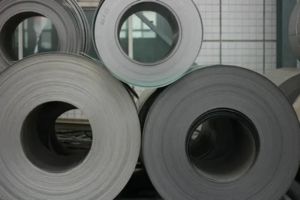
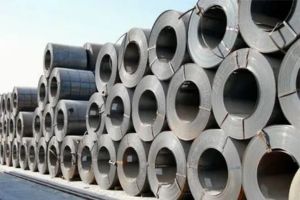
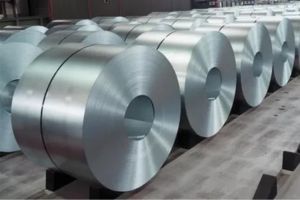
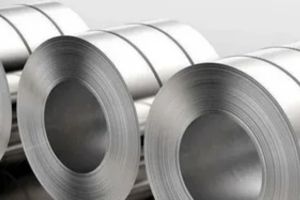
Nickel Alloy Coils are adaptable materials employed across numerous industries thanks to their superior corrosion resistance, strength at high temperatures, and remarkable mechanical characteristics. These coils consist of nickel combined with additional alloying components like chromium, molybdenum, and iron, providing protection against a broad spectrum of corrosive settings, such as acids, alkalis, and saltwater. Well-known nickel alloy coils include Inconel, Monel, and Hastelloy, each customized for particular uses according to their distinct properties. These coils are utilized in chemical processing, aerospace, oil and gas, marine, and other challenging settings where dependability and performance are essential.
|
Standard |
ASTM B162 / ASME SB162 |
|
Thickness |
0.2mm – 5.0mm |
|
Width |
3.2mm – 1500mm |
|
Length |
AS PER CUSTOMER’S REQUIREMENT |
|
Test Certificate |
Yes |
|
Coils Hardness |
Half Hard, Quarter Hard, Soft, Hard, Spring Hard |
|
Value Added Services |
Cutting, Beveling, Polishing, Threading, Destructive, Non Destructive, Ultrasonic Testing |
|
Form |
Coil / Strip |
| Element | Density | Melting Point | Tensile Strength | Yield Strength (0.2%Offset) | Elongation |
| Nickel Alloy | 8.9 g/cm3 | 1446 °C (2635 °F) | Psi – 67000 , MPa – 462 | Psi – 21500 , MPa – 148 | 45 % |
| Grade | C | Mn | Si | S | Cu | Fe | Ni |
| Nickel Alloy | 0.15 max | 0.35 max | 0.35 max | 0.01 max | 0.25 max | 0.40 max | 99.0 min |
At Sumakhsteel, we take great pride in being the largest supplier and manufacturer in the USA, delivering advanced solutions for every one of your piping requirements. With cutting-edge manufacturing facilities strategically situated across the USA, we maintain an extensive stock of more than 25,000 tons of top-grade materials kept ready and available in inventory.
Reach out to us for a fast quote tailored to your requirement.
We supply these Nickel Alloy Coils conforming to DIN, ISO, JIS or ANSI Standard.
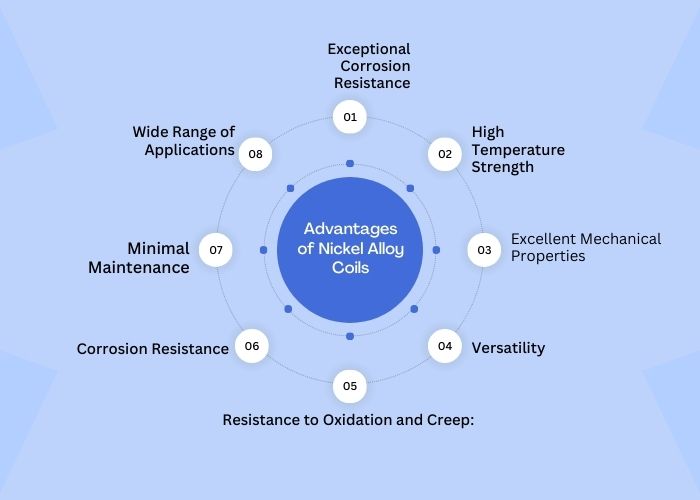
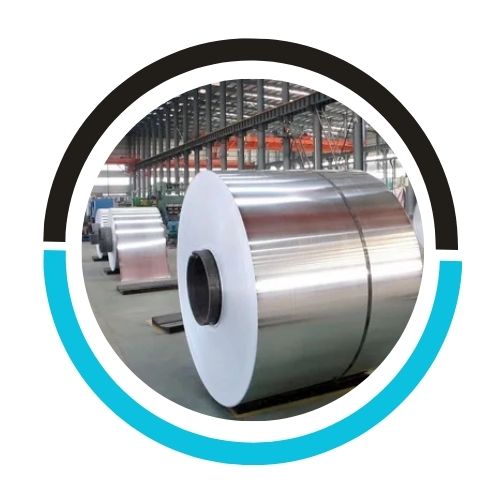

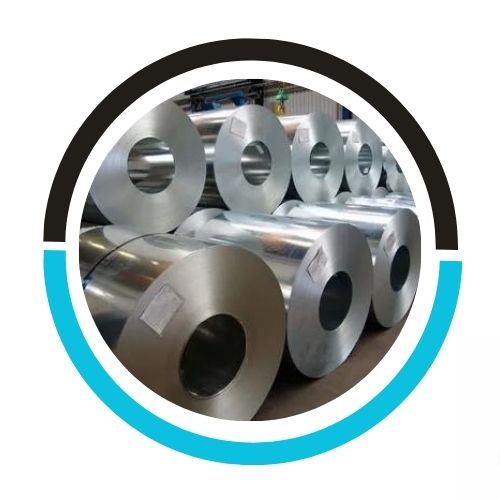
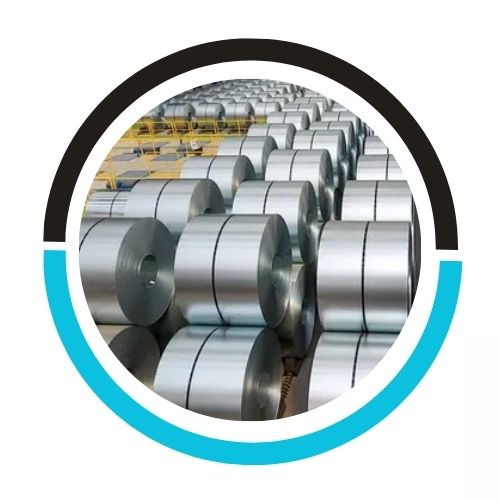
Nickel Alloy Coils have applications as varied as the industries they cater to, led chiefly by the aerospace, railway, construction and automotive sectors, along with petrochemical, nuclear, medical, Oil & Gas, Chemical, Pharmaceutical, Food & Beverage, Nuclear, Thermal Power plants, Paper and Pulp, marine and mining, etc.
Yes, Nickel Alloy Coils can be joined through several welding methods including TIG (tungsten inert gas), MIG (metal inert gas), and SMAW (shielded metal arc welding). That said, welding nickel alloys demands particular care because of their elevated nickel content, which may cause sensitization and embrittlement if not managed correctly. Correct welding practices, such as pre-heating, post-weld heat treatment, and the selection of suitable filler metals and shielding gases, are vital to preserve the soundness and corrosion resistance of the weld joints. Furthermore, it’s important to adhere to manufacturer guidelines and industry best practices to reduce the chance of weld-related defects and sustain the performance of nickel alloy coils during service.
Nickel alloy coils are well-suited for a range of industries and applications in which corrosion resistance, high temperature performance, and mechanical strength are vital. These span chemical processing, aerospace, oil and gas, marine, automotive, electronics, medical equipment, and renewable energy sectors. They serve to manufacture reactors, vessels, piping systems, heat exchangers, turbines, valves, pumps, surgical instruments, implants, and electronic components, among others, in cases where reliability and performance under demanding conditions are essential.
For welding nickel alloy coils, suggested joining techniques include TIG (tungsten inert gas) welding for accurate control of heat input with minimal spatter, MIG (metal inert gas) welding for its flexibility and greater deposition rates, and SMAW (shielded metal arc welding) for heavier materials and outdoor use. Additional approaches such as SAW (submerged arc welding), electron beam welding (EBW), and laser beam welding (LBW) can also work well depending on the thickness and particular needs of the coils. Adequate pre-heating, post-weld heat treatment, and the choice of suitable filler metals and shielding gases are essential to guarantee weld soundness and performance.
Yes, particular factors must be taken into account when machining or fabricating nickel alloy coils. Nickel alloys are durable materials with elevated work hardening rates, calling for reduced speeds, deep cuts, and plenty of coolant while machining to limit work hardening and tool wear. Carbide tooling is advised, and machining should be performed at low speeds to avoid overheating. Follow-up operations such as stress relieving or annealing might be required to bring back material properties. Furthermore, nickel alloy coils ought to be cleaned carefully prior to fabrication to eliminate any contaminants that might impact weld quality or corrosion resistance.
Phone Us: +91 7208967217
Email: sales@sumakhsteel.com