Home > Nickel Alloy > Nickel Alloy Stud Bolts
Set out on a path toward unrivaled performance with our Nickel Alloy Stud Bolts, prominently displayed on our product pages. We take pride in offering a wide array of premium-grade solutions carefully crafted to satisfy the varied needs of many industries. Explore a world of versatility and reliability with our precisely engineered products, skillfully designed to excel across a wide range of industrial applications. Our Nickel Alloy Stud Bolts demonstrate precision engineering that satisfies rigorous industry standards, guaranteeing durability and outstanding resistance to corrosion. As a trusted retailer, we place customer satisfaction first by providing flexible options, competitive pricing, and fast delivery. Whether in construction, manufacturing, or engineering endeavors, our Nickel Alloy Stud Bolts provide unmatched performance, setting new benchmarks for excellence and innovation. Rely on our steadfast dedication to quality and reliability for your bolting requirements.
| Grade | Nickel |
| Specifications | ASTM B 160/164, ASME SB 160/164 |
| Dimension | ASTM, IS, BS and all International Standards |
| Length | 3mm to 200mm |
| Size | M3 – M56 | 3/6″ to 2″ | Custom Sizes |
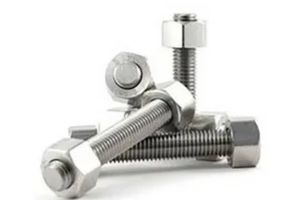
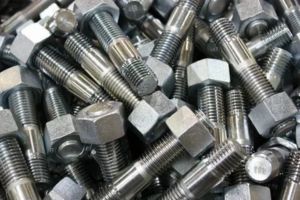
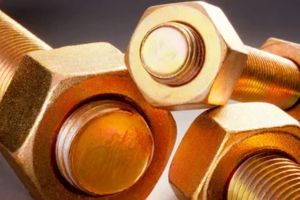
| Types | Threaded Rod, Class A double ended stud, Tie Rod, Double Ended Stud, Stud Bolts, Bronze Hex Studs, Threaded Studs etc etc. |
| Element | Density | Melting Point | Tensile Strength | Yield Strength (0.2%Offset) | Elongation |
| Nickel | 8.9 g/cm3 | 1446 °C (2635 °F) | Psi – 67000 , MPa – 462 | Psi – 21500 , MPa – 148 | 45 % |
| Grade | Ni | C | Mo | Mn | Si | Fe | P | S | Cu | Cr |
| Nickel | 99.0 min | 0.15 max | – | 0.35 max | 0.1 max | 0.4 max | – | 0.01 max | 0.25 max | – |
| Nickel | Balance | 0.15 max | – | 0.35 max | 0.35 max | 0.40 max | – | 0.01 max | 0.25 max | – |
At Sumakhsteel, we take pride in being the largest supplier and manufacturer in the USA, delivering advanced solutions for every one of your piping requirements. With cutting-edge manufacturing facilities strategically positioned across the USA, we maintain an extensive stock of more than 25,000 tons of top-grade materials kept readily on hand.
Reach out to us for a fast quote tailored to your requirement.
We supply these Nickle Alloy Stud Bolts conforming to DIN, ISO, JIS or ANSI Standard.

Corrosion resistance: Nickel alloys like Inconel or Monel offer outstanding resistance to corrosion, and this quality, particularly in demanding settings such as marine or chemical facilities, helps guard against and reduce the degradation of the cable’s lifespan.
High-Temperature Working: Nickel alloys can endure high temperatures without sacrificing their mechanical characteristics. This makes them well suited for uses where bolts are secured under high heat, such as gas turbines or exhaust systems.
Strength and durability: Nickel alloys deliver outstanding mechanical characteristics, including exceptional strength and hardness, and guarantee dependability in critical uses. They can endure high stresses and loads without damage or failure.
Chemical compatibility: Nickel alloys are highly resistant to a range of chemicals, acids and alkalis. This trait matters where chemical reactions or contact with corrosive oils and gases are frequent.
Low thermal expansion: Nickel alloys possess a relatively low coefficient of thermal expansion when compared to other materials, which aids the stability of the composition amid changing temperatures. This attribute matters where specific shapes must be achieved.
Resistance to creep: Nickel alloys show excellent resistance to creep deformation even under elevated temperatures and sustained stresses. This makes them well suited for applications requiring long-term reliability, such as power generation or aerospace.
Versatility: Nickel alloys are available in a variety of materials, permitting flexibility according to the demands of a particular application. This adaptability ensures that suitable materials can be chosen to satisfy the requirements of different environments and operating conditions.
Nonmagnetic materials: Certain nickel alloys, such as Inconel 600, display nonmagnetic characteristics, which can prove useful in specific applications where reducing magnetic interference is needed, such as electronics or MRI machines


Nickel Alloy Stud Bolts serve applications as varied as the industries they support, led chiefly by the aerospace, railway, construction and automotive industries along with petrochemical, nuclear, medical, Oil & Gas, Chemical, Pharmaceutical, Food & Beverage, Nuclear, Thermal Power plants, Paper and Pulp, marine and mining, etc.
Oil & Gas Industry: Nickel alloy stud bolts serve to fasten essential equipment like flanges and valves in offshore drilling rigs, refineries and petrochemical plants, where they frequently appear in hot settings and elevated temperatures.
Chemical Properties: In chemical corrosion control plants, nickel alloy stud bolts deliver outstanding corrosion resistance and retain their mechanical properties under demanding conditions
Power generation: Within power plants, particularly those relying on fossil fuels or nuclear power, nickel alloy stud bolts are applied in essential parts such as steam turbines, heat exchangers, boiler systems with intense heat, and under warm in situ conditions
Aerospace and Safety: Nickel alloy stud bolts find use in aircraft engines, gas turbines, and additional components in aerospace applications that demand high strength, corrosion resistance and heat resistance.
Marine Applications: Nickel alloy stud bolts are employed in shipbuilding, offshore platforms and marine equipment to guard against corrosion and preserve structural integrity in marine environments containing salt water and free corrosives. The insertion is continuous.
Identify application requirements: Grasp the circumstances in which stud bolts will function. Take into account temperature, pressure, corrosion resistance, and environmental factors.
Check Industry Standards: Verify whether industry or application-specific standards specify the material types and requirements for stud bolts.
Material options: Nickel alloys for a range of distinct characteristics. Select a nickel alloy that delivers the corrosion resistance, strength, and thermal properties your application demands. Widely used nickel alloys include Inconel, Monel, Hastelloy, and Alloy 20.
Size and Dimensions: Establish the suitable size and quantity of stud bolts according to design requirements, including thread size, length, diameter and thread pitch
Corrosion Resistance: Nickel alloys are recognized for their corrosion resistance. Confirm that the selected treatment can endure the corrosive elements of your application, whether chemicals, seawater, or high-temperature oxidation exposure.
Heat Resistance: Take into account the heat of your application and pick a nickel alloy that can retain its mechanical properties without notable degradation under such conditions.
Mechanical properties: Assess the properties of the nickel alloy, such as tensile strength, yield strength, and hardness, to confirm that it satisfies the requirements of your application.
Testing and Certification: Make sure students meet the relevant industry standards and certifications, such as ASTM or ASME, to guarantee quality and performance.
Supplier Reputation: Select a well-regarded supplier or manufacturer recognized for offering dependable technical support and customer service to produce high-quality nickel alloy stud bolts.
Yes, Nickel alloy stud bolts can be recycled. Nickel alloys, such as Inconel, Monel, and Hastelloy, are able to be recycled through a range of methods like melting and refining, recovering the nickel content so it can be reused in producing new alloys, which supports sustainability and resource conservation initiatives.
Nickel alloy stud bolts work well for underground use thanks to their corrosion resistance and durability. Because they hold up against harsh conditions like moisture and chemicals, they are perfect for fastening components in underground structures such as pipelines, tunnels, and mining operations, providing lasting reliability and safety.
When installing nickel alloy stud bolts, take into account elements such as correct torque specifications to avoid over-tightening, verifying compatibility with mating parts, and keeping suitable environmental conditions to prevent corrosion. Furthermore, adhere to manufacturer guidelines for installation methods and account for the application’s temperature, pressure, and possible chemical exposure to achieve optimal performance.
Nickel alloy stud bolts come in several configurations, such as fully threaded studs, double end studs featuring threads on both ends, and tap-end studs with threads on one end and an unthreaded section on the other for nut engagement. Furthermore, stud bolts can differ in diameter, length, and thread pitch to match particular applications.
Phone Us: +91 7208967217
Email: sales@sumakhsteel.com