Home > Nickel Alloy > Nickel Alloy 201 Flanges
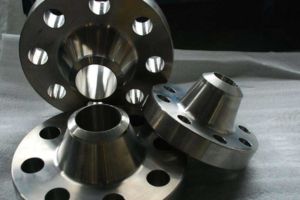
Nickel Alloy 201 Flanges are essential parts of piping systems, valued for their strong corrosion resistance, high-temperature strength, and outstanding mechanical properties. Extensively used across a range of industries such as chemical processing, petrochemical, oil and gas, power generation, aerospace, and marine sectors, Nickel Alloy 201 Flanges serve as reliable defenders against corrosive environments and extreme thermal conditions. Their remarkable properties render them essential in protecting critical infrastructure and ensuring dependable performance in challenging operational settings.
| Specifications | ASTM B564 / ASME SB564, ASTM B564 UNS N02201, ASME SB564 UNS N02201 |
|---|---|
| Nickel 201 Flange size | 1/2″ – 60″ |
| Nickel 201 Flanges Standards | ANSI/ASME B16.5, B 16.47 Series A & B, B16.48, BS4504, BS 10, EN-1092, DIN, ANSI Flanges, ASME Flanges, BS Flanges, DIN Flanges, EN Flanges, GOST Flanges. |
| Alloy 201 Flanges Class / Pressure | 150#, 300#, 600#, 900#, 1500#, 2500#, PN6, PN10, PN16, PN25, PN40, PN64 etc |
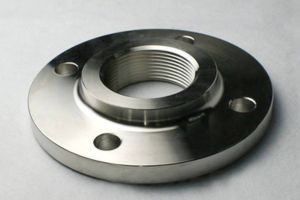
| Main Types | Forged / Threaded / Screwed / Plate |
| Nickel 201 Pipe Flanges Test Certificates | EN 10204/3.1B Raw Materials Certificate 100% Radiography Test Report Third Party Inspection Report, etc |
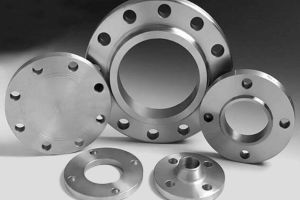
| Types of Nickel 201 Flanges |
|
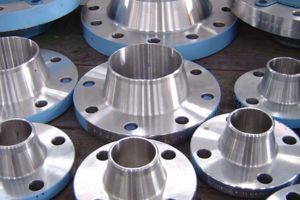
| Manufacturers of Nickel Alloy 201 Flanges |
|
| Nickel 201 Flanges Face | Raised Face (RF), Flat Face(FF), Ring-Type Joint (RTJ), Tongue-and-Groove (T&G), Male-and-Female (M&F) |
| Application |
|
| Material Test Certificates (MTC) as per EN 10204 3.1 and EN 10204 3.2, Test Certificates certifying NACE MR0103, NACE MR0175 | |
| Grade | C | Mn | Si | S | Cu | Fe | Ni |
| Nickel 201 | 0.02 max | 0.35 max | 0.35 max | 0.01 max | 0.25 max | 0.40 max | 99.0 min |
| Element | Density | Melting Point | Tensile Strength | Yield Strength (0.2%Offset) | Elongation |
| Nickel 201 | 8.9 g/cm3 | 1446 °C (2635 °F) | Psi – 67000 , MPa – 462 | Psi – 21500 , MPa – 148 | 45 % |
At Sumakhsteel, we take pride in being the largest supplier and manufacturer in the USA, delivering advanced solutions for every one of your piping requirements. With cutting-edge manufacturing facilities strategically positioned across the USA, we maintain an extensive inventory of more than 25,000 tons of top-grade materials kept ready in stock.
Reach out to us for a fast quote tailored to your needs.
We provide these Nickel Alloy 201 Flanges in accordance with DIN, ISO, JIS or ANSI Standard.
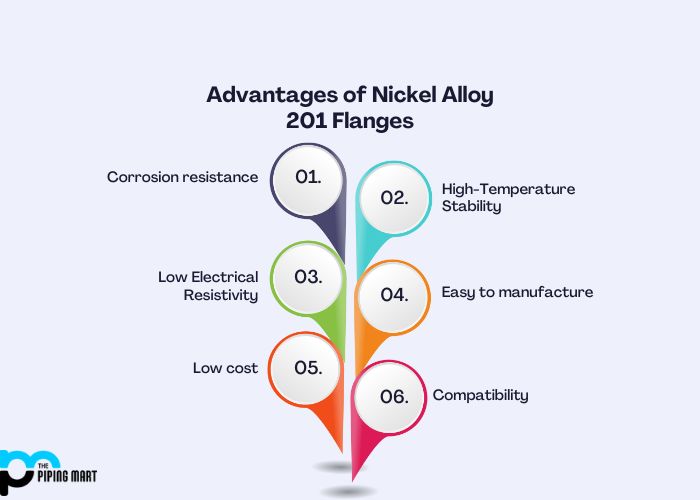
Corrosion resistance: Nickel alloy 201 offers excellent resistance to corrosion, particularly in environments that reduce corrosion. As a result, it works well across many industries that involve corrosive substances.
High-Temperature Stability: Flanges produced from nickel alloy 201 can endure elevated temperatures while maintaining their structural integrity. Because of these characteristics, they are well suited for high-temperature uses, including the chemical and fuel sectors.
Low Electrical Resistivity: Nickel Alloy 201 features low electrical resistivity, which makes it perfect for uses where electrical conductivity matters, such as electrical and electronic components.
Easy to manufacture: Nickel alloy 201 is simple to fabricate and is available in numerous forms, including flanges. This makes it possible to tailor flanges to particular needs.
Low cost: Even with all its benefits, nickel alloy 201 remains fairly cost-effective when compared with other nickel-based products. This makes it an appealing choice for uses where both performance and cost matter.
Compatibility: Nickel Alloy 201 works well with a wide range of materials, including other metals and alloys. Such assemblies make them appropriate for diverse environments and applications without galvanic corrosion or other assembly-related problems.


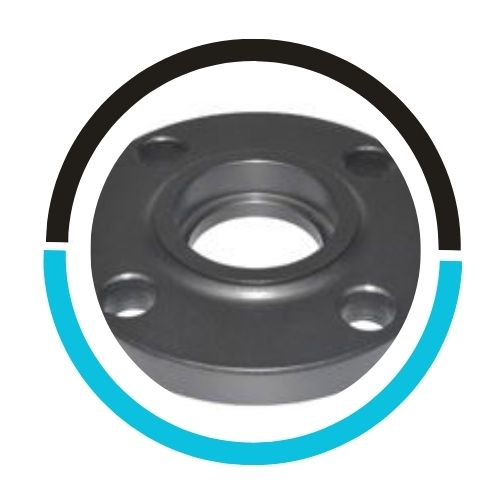
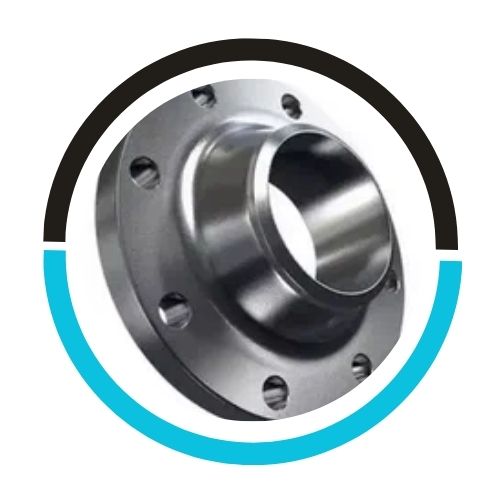
Nickel alloy 201 flanges see broad use across numerous industries thanks to their outstanding corrosion resistance, strength at elevated temperatures, and excellent mechanical characteristics. Typically encountered in chemical processing facilities, petrochemical refineries, oil and gas exploration sites, power generation stations, aerospace uses, and marine settings, these flanges join pipes, valves, and equipment under challenging operating conditions.
Chemical Industry: Flanges manufactured from nickel alloy 201 are widely applied in medical devices that demand resistance to chemical corrosion and elevated temperatures. They serve in reactors, vessels and piping systems.
Electronics manufacturing: In the electronics sector, nickel alloy 201 flanges are valued for their resistance to corrosion and strong electrical conductivity. They appear in components used for electronics and semiconductor manufacturing.
Aerospace Applications: Within aerospace uses, nickel alloy 201 flanges are applied in materials exposed to high temperatures and corrosive conditions, serving in aircraft engines, gas turbines, and exhaust systems.
Marine Applications: Because of their resistance to seawater, Nickel Alloy 201 flanges are employed in marine settings including shipbuilding, marine oil refineries and desalination plants.
Oil and Gas Industry: Flanges made from nickel alloy 201 are deployed in oil and gas processing plants that come into contact with water and corrosive gas. They serve in pipelines, valves and fittings.
Food Processing : Industry Nickel alloy 201 flanges are utilized in food processing equipment that calls for corrosion resistance and cleanability. It serves in pumps, valves and tanks used to handle food and beverages.
Water resistance: Nickel Alloy 201 is recognized for withstanding a range of corrosive substances, such as alkalis, salts and acids. Verify the degree of corrosion resistance your application demands and confirm that Nickel Alloy 201 satisfies those needs.
Temperature resistance: Nickel alloy 201 demonstrates outstanding thermal stability, which makes it well-suited for high-temperature uses. Take into account the operating temperature of your system and verify that the flanges can endure that temperature without failing.
Mechanical properties: Identify the mechanical characteristics of nickel alloy 201, including tensile strength, yield strength, and elongation. Confirm that these traits align with what your application demands to avoid early flange failure or deformation.
Compatibility: Confirm that nickel alloy 201 works well with the other parts of your system to prevent possible issues like galvanic corrosion or chemical reactions.
Size and Dimensional Requirements: Pick flanges that correspond to the size and dimensions your piping system calls for. Take pipe thickness, flange size, and bolt-hole layout into account to guarantee correct fit and alignment.
Standards and Specifications: Verify whether particular industry standards or specifications apply to the flanges, such as ASTM or ASME standards, to ensure conformance and compliance with your system.
Supplier Reputation and Quality: Opt for a trustworthy supplier recognized for delivering high quality nickel alloy products. Examine certifications and quality assurance processes to confirm the flange satisfies industry standards and specifications.
Nickel Alloy 201 flanges are typically not advised for high-temperature uses because of their restricted thermal stability and reduced oxidation resistance when compared to other nickel alloys. In high-temperature settings, alloys containing more nickel along with extra alloying elements are favored for better performance and longevity.
| Flange Weights by Pressure Class and Size | ||||||||||||||||||
| Pipe Size | 150 # | 300 # | 600 # | 900 # | 1500 # | 2500 # | ||||||||||||
| WN | SO | BLD | WN | SO | BLD | WN | SO | BLD | WN | SO | BLD | WN | SO | BLD | WN | SO | BLD | |
| 1/2″ | 2 | 1 | 1 | 2 | 1 | 1 | 2 | 2 | 2 | SEE 1500 # WEIGHTS | 5 | 4 | 4 | 7 | 7 | 7 | ||
| 3/4″ | 2 | 2 | 2 | 3 | 3 | 3 | 4 | 3 | 3 | SEE 1500 # WEIGHTS | 6 | 5 | 6 | 8 | 8 | 8 | ||
| 1″ | 3 | 2 | 2 | 4 | 3 | 3 | 4 | 4 | 4 | SEE 1500 # WEIGHTS | 9 | 8 | 8 | 12 | 11 | 11 | ||
| 1 1/2″ | 4 | 3 | 3 | 7 | 6 | 6 | 8 | 7 | 8 | SEE 1500 # WEIGHTS | 13 | 12 | 13 | 25 | 22 | 23 | ||
| 2″ | 6 | 5 | 5 | 9 | 7 | 8 | 12 | 9 | 10 | SEE 1500 # WEIGHTS | 25 | 25 | 25 | 42 | 37 | 39 | ||
| 2 1/2″ | 8 | 7 | 7 | 12 | 10 | 12 | 18 | 13 | 15 | SEE 1500 # WEIGHTS | 36 | 36 | 35 | 52 | 55 | 56 | ||
| 3″ | 10 | 8 | 9 | 15 | 13 | 16 | 23 | 16 | 20 | 31 | 26 | 29 | 48 | 48 | 48 | 94 | 83 | 86 |
| 4″ | 15 | 13 | 17 | 25 | 22 | 27 | 42 | 37 | 41 | 53 | 53 | 54 | 73 | 73 | 73 | 145 | 125 | 130 |
| 5″ | 19 | 15 | 20 | 32 | 28 | 35 | 68 | 63 | 68 | 86 | 83 | 87 | 130 | 130 | 140 | 245 | 210 | 225 |
| 6″ | 24 | 19 | 26 | 42 | 39 | 50 | 81 | 80 | 86 | 110 | 110 | 115 | 165 | 165 | 160 | 380 | 325 | 345 |
| 8″ | 39 | 30 | 45 | 67 | 58 | 81 | 120 | 115 | 140 | 175 | 170 | 200 | 275 | 260 | 300 | 580 | 485 | 530 |
| 10″ | 52 | 43 | 70 | 91 | 81 | 124 | 190 | 170 | 230 | 260 | 245 | 290 | 455 | 435 | 510 | 1075 | 930 | 1025 |
| 12″ | 80 | 64 | 110 | 140 | 115 | 185 | 225 | 200 | 295 | 325 | 325 | 415 | 690 | 580 | 690 | 1525 | 1100 | 1300 |
| 14″ | 110 | 90 | 140 | 180 | 165 | 250 | 280 | 230 | 355 | 400 | 400 | 520 | 940 | NA | 975 | NA | NA | NA |
| 16″ | 140 | 98 | 180 | 250 | 190 | 295 | 390 | 330 | 495 | 495 | 425 | 600 | 1250 | NA | 1300 | NA | NA | NA |
| 18″ | 150 | 130 | 220 | 320 | 250 | 395 | 475 | 400 | 630 | 680 | 600 | 850 | 1625 | NA | 1750 | NA | NA | NA |
| 20″ | 180 | 165 | 285 | 400 | 315 | 505 | 590 | 510 | 810 | 830 | 730 | 1075 | 2050 | NA | 2225 | NA | NA | NA |
| 22″ | 225 | 185 | 355 | 465 | 370 | 640 | 720 | 590 | 1000 | NA | NA | NA | NA | NA | NA | NA | NA | NA |
| 24″ | 260 | 220 | 430 | 580 | 475 | 790 | 830 | 730 | 1250 | 1500 | 1400 | 2025 | 3325 | NA | 3625 | NA | NA | NA |
Choose Nickel Alloy 201 flanges according to the demands of your application, including temperature, pressure, corrosion resistance, and mechanical properties. Take into account how well they work with adjacent materials, the surrounding environment, and applicable regulatory standards. Seek advice from material specialists or suppliers regarding appropriate alloys and setups to guarantee peak performance and dependability.
Yes, Nickel Alloy 201 flanges can be welded using standard welding techniques including gas tungsten arc welding (GTAW), gas metal arc welding (GMAW), and shielded metal arc welding (SMAW). To reduce the chance of cracking and maintain sound weld quality, preheating and post-weld heat treatment might be required.
Nickel Alloy 201 flanges are advised against for cryogenic use because of their restricted ductility and susceptibility to embrittlement at low temperatures. For cryogenic service, alloys featuring greater nickel content and specialized compositions are favored to guarantee sufficient mechanical properties and resistance to brittle fracture in extreme cold conditions.
Call Us: +91 7208967217
Email Us: sales@sumakhsteel.com