Home > Stainless Steel Flanges >Stainless Steel 301 Flanges
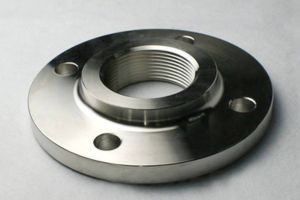
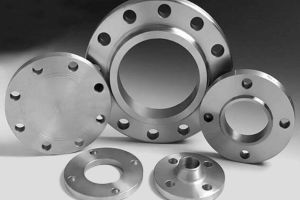
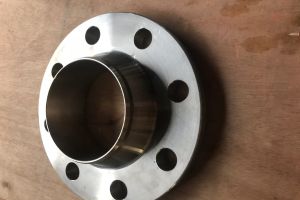
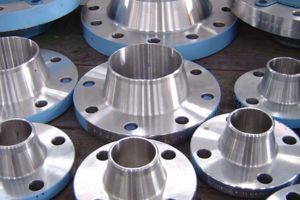
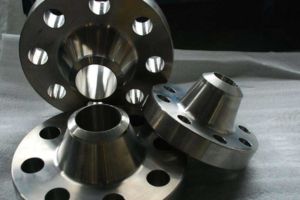
Stainless Steel 301 flanges become essential elements in a wide range of piping systems, praised for their remarkable mechanical properties and resistance to corrosion. Made from Stainless Steel 301, this type is valued for its outstanding combination of strength, durability, and ability to withstand corrosion. Featuring a composition abundant in chromium and nickel, Stainless Steel 301 demonstrates impressive resistance to oxidation and corrosion across a wide variety of conditions, positioning it as a leading choice for applications that demand toughness against severe elements. Furthermore, its alloy components add to its remarkable mechanical capabilities, delivering high tensile strength, excellent formability, and resistance to wear. Ultimately, Stainless Steel 301 flanges serve as reliable components across numerous industries, ensuring consistent performance and extended service life under challenging operating conditions.
| Size Chart | 1/2″ (15 NB) to 48″ (1200NB) DN10~DN5000 |
|---|---|
| Standards | API7S-15, API7S-43, API605, ANSI/ASME B16.5, B16.47 A & B, B16.48, ASME, BS, DIN, EN, BS4504, BS 10, EN-1092, DIN, ANSI, GOST Flange, ASME/ANSI B16.5/16.36/16.47A/16.47B, MSS S44, ISO70051, JISB2220, BS1560-3.1, EN1092 |
| Pressure Rating ANSI | 600 LBS, 900 LBS, 150 LBS, 2500 LBS, 300 LBS, 1500 LBS |
| Pressure Calculation in DIN | 16Bar 6Bar 25Bar 40Bar 10Bar / PN10 PN16 PN6 PN25 PN64 PN40 |
| JIS | 5K, 10 K, 16 K 20 K, 30 K, 40 K, 63 K |
| UNI | 6Bar 10Bar 16Bar 25Bar 40Bar |
| EN | 6Bar 10Bar 16Bar 25Bar 40Bar |
| Coating | Anti-rust Paint, Zinc Plated, Oil Black Paint, Cold and Hot Dip Transparent |
| Most common types | Forged / Threaded / Screwed / Plate |
| Test Certificates | EN 10204/3.1B Raw Materials Certificate 100% Radiography Test Report Third Party Inspection Report, etc |
| Production technique |
|
| Connect Type/ Flange Face Type | Ring Type Joint (RTJ), Flat Face (FF), Large Male-Female (LMF), Raised Face (RF), Lap-Joint Face (LJF), Small Male-Female (SMF), Small Tongue, Large Tongue & Groove, Groove |
| Special design |
As per your drawing AS, ANSI, BS, DIN and JIS |
| Test | Hydrostatic testing machine, X-ray detector, Direct-reading Spectrograph, UI trasonic flaw detector, Magnetic particle detector |
| Equipment | Bending machine, Pushing Machine,Press machine, electric bevelling machine, Sand-blasting machine etc |
| Origin | Indian / West Europe / Japan / USA / Korean |
| Manufacturer of |
ANSI DIN, GOST, JIS, UNI, BS, AS2129, AWWA, EN, SABS, NFE etc.
|
| Uses & application |
|
| Material Test Certificates (MTC) as per EN 10204 3.1 and EN 10204 3.2, Test Certificates certifying NACE MR0103, NACE MR0175 | |
| Carbon | 0.15 max |
| Chromium | 16 – 18 |
| Iron | 0.4 max |
| Manganese | 2 max |
| Nickel | 6 – 8 |
| Phosphorus | 0.045 max |
| Silicon | 1 max |
| Sulphur | 0.03 max |
| Density | Melting Point | Tensile Strength | Yield Strength (0.2%Offset) | Elongation |
| 8.0 g/cm3 | 1400 °C (2550 °F) | Psi – 75000 , MPa – 515 | Psi – 30000 , MPa – 205 | 35 % |
At Sumakhsteel, we take great pride in being the largest supplier and manufacturer in the USA, delivering advanced solutions for all your piping requirements. With cutting-edge manufacturing facilities strategically situated in the USA, we maintain an extensive stock of more than 25,000 tons of top-quality materials ready and available on hand.
Reach out to us for a fast quote tailored to your requirement.
We supply these Stainless Steel 301 Flanges in accordance with DIN, ISO, JIS or ANSI Standard.
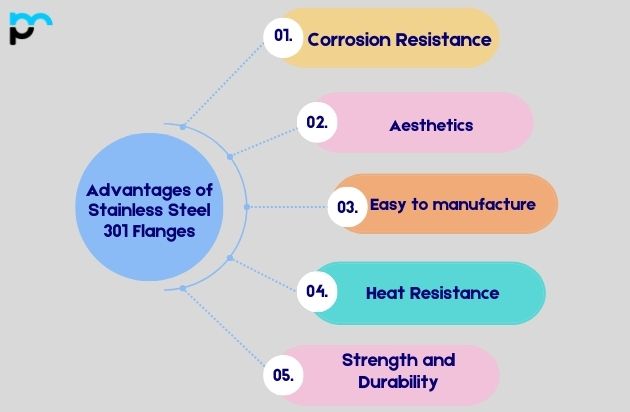
Corrosion Resistance: Stainless Steel 301 offers strong resistance to corrosion, making it well suited for numerous applications where moisture, chemicals, and other corrosive substances are present This resistance to corrosion promotes extended flange life and dependable performance, even under demanding conditions.
Aesthetics: Stainless Steel 301 features an appealing surface, with a bright, rotating finish that gives the flange visual appeal. This aesthetic quality makes stainless steel 301 flanges a good fit for settings where appearance matters, such as architectural maintenance
Easy to manufacture: Stainless steel 301 is remarkably simple to fabricate, enabling flanges to be produced in intricate shapes and configurations. This adaptability supports customization and ensures that flanges can be built to match specific project needs, delivering flexibility and usability.
Heat Resistance: Stainless steel 301 demonstrates outstanding resistance to elevated temperatures, making it appropriate for applications where flanges undergo heating or heating cycles. This characteristic ensures that flanges maintain their configuration integrity and performance across varying temperature conditions.
Strength and Durability: Stainless steel 301 is recognized for its high strength and durability. This material possesses excellent tensile strength and rigidity, enabling the flanges to endure high-stress and high-temperature conditions without deforming or failing. Consequently, stainless steel 301 flanges are well suited for critical industrial applications.
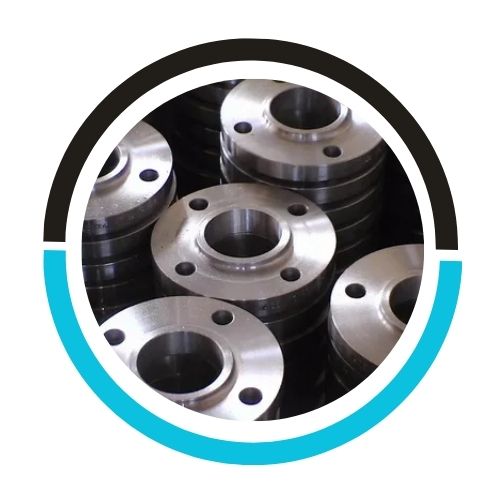
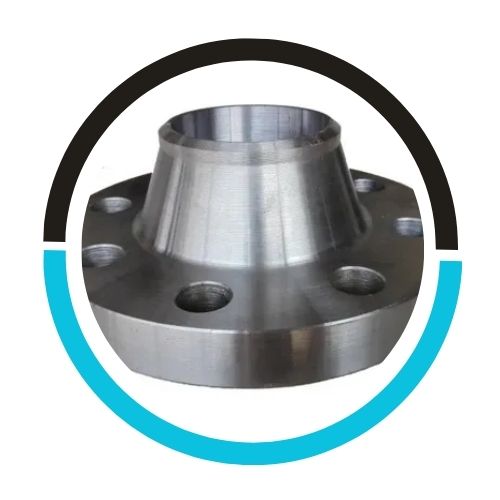
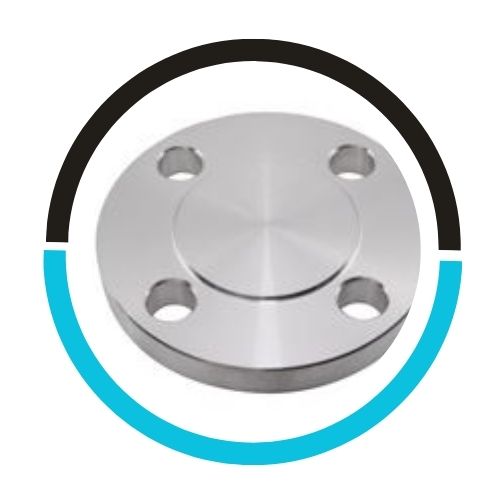
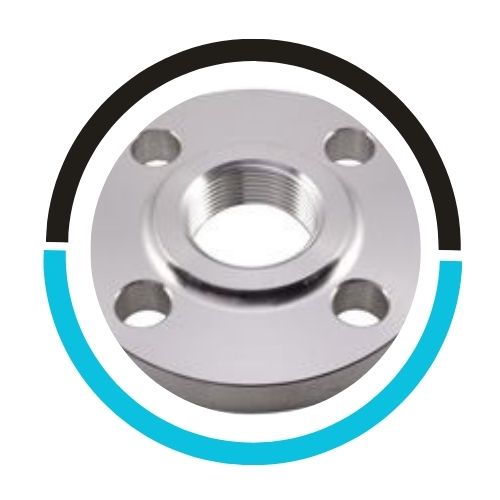
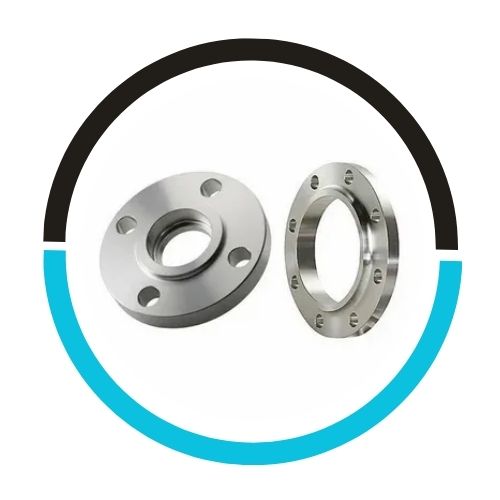

Stainless Steel 301 Flanges offer outstanding mechanical properties and hold up against wear, corrosion, and elevated temperatures, making them common across many industries. These flanges see extensive use in the oil and gas, petrochemical, power generation, and aerospace sectors. They serve a key role in connecting equipment, valves, and piping systems. Thanks to their remarkable strength, toughness, and resistance to wear, they are ideal for uses subjected to harsh operating conditions, including high temperatures, high pressures, and corrosive settings.
Chemical Applications: Stainless steel 301 flanges serve to join pipes and equipment in chemical plants. Because of their resistance to corrosion, they are safely suited for handling corrosive chemicals and acids.
Chemical: Stainless steel 301 flanges find application in medical device and pipeline systems where cleanliness and chemical resistance matter. They deliver dependable and hygienic connections among components.
Food and Beverage: Stainless steel 301 flanges are employed in food and beverage production facilities where hygiene and corrosion resistance are essential. They meet food safety regulations and can endure standard cleaning procedures and oral sterilization.
Oil and Gas Industry: Flanges built from 301 stainless steel are utilized in oil refineries, gas stations and natural gas fields. They can handle high pressures and temperatures, which makes them well suited for critical industry applications.
Specify application requirements: Detail the operating conditions of your application, such as temperature, pressure, corrosion resistance, and environmental factors. Knowing these parameters will guide you in choosing flanges capable of meeting your application’s demands.
End connection type: Take into account the end connection needs of your application, whether welding, bolting, or threading. Make sure the flange you choose provides end connections to other system components to enable proper installation and sealing.
Flange type and size: Choose the suitable flange type (e.g., weld neck, slip-on, socket weld, blind) according to the piping system design and installation needs. The right flange size guarantees compatibility with the piping system and performance so the expected condition aligns and a pressure display is chosen.
Material options: Stainless steel 301 is versatile, but you must confirm that it satisfies the corrosion resistance, strength and thermal requirements of your application. Weigh factors like the type of spreader, the presence of corrosive chemicals, and the operating temperature.
Yes, Stainless Steel 301 flanges can be welded with standard welding methods including TIG (Tungsten Inert Gas) welding, MIG (Metal Inert Gas) welding, and resistance welding. That said, preheating and post-weld heat treatment might be necessary to reduce the chance of distortion and guarantee sound weld quality.
Stainless Steel 301 flanges are less prone to galvanic corrosion than other metals because of their built-in resistance to corrosion. Nevertheless, if paired with unlike metals in a conductive setting, galvanic corrosion can take place. Applying proper insulation or choosing compatible materials can reduce this risk.
Yes, Stainless Steel 301 flanges can be completely recycled once they are no longer in use. Stainless steel is a material with excellent recyclability, and its properties are preserved through the recycling process without any degradation. Recycling Stainless Steel 301 flanges lowers the need for raw materials, saves energy, and reduces environmental impact, which makes it an environmentally friendly option.
Yes, Stainless Steel 301 flanges are suitable for structural applications that demand strength, corrosion resistance, and durability. Because of their high tensile strength and toughness, they work well as structural components across a range of industries, such as construction, architecture, aerospace, and automotive engineering.
Phone Us: +91 7208967217
Mail: sales@sumakhsteel.com