Home > Nickel Alloy > Nickel Alloy 200 Fasteners
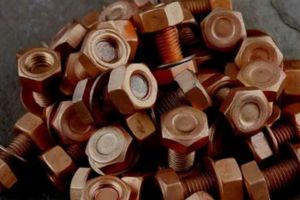
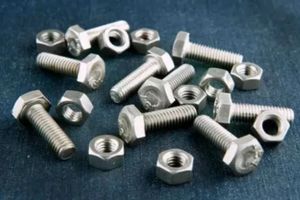
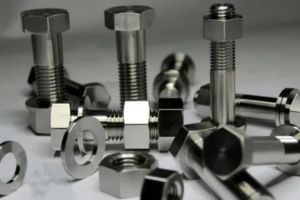
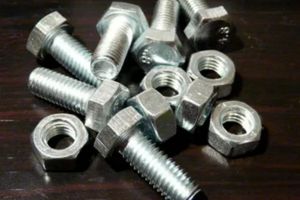
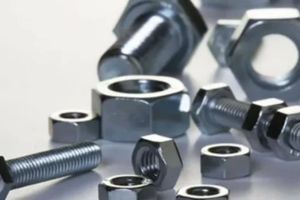
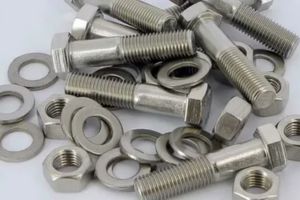
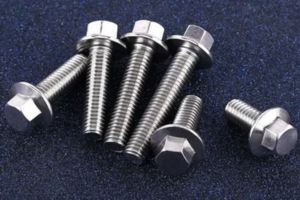
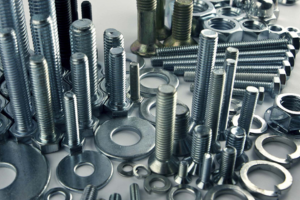
Nickel Alloy 200 Fasteners are hardware components manufactured from Nickel 200, a commercially pure wrought nickel offering excellent corrosion resistance. These fasteners, which include screws, bolts, nuts, and washers, find broad use in settings involving high temperatures and corrosive chemicals, such as the chemical processing, marine, and aerospace industries. Nickel Alloy 200 Fasteners deliver outstanding mechanical strength, thermal stability, and resistance to a range of acids and alkalis, making them well suited for critical applications where reliability and longevity are essential.
| Fasteners Material Specification | ASME SB 160/ ASTM B 160, UNS 2200 Bolts |
|---|---|
| Sizes | Metric Sizes – M2 to M100 & Inch Size- 1/8” to 10” |
| Thread | Unified, Metric, Acme, British Imperial, Special requirements |
| Dimentional Standard | JIS, BS, IS, ASME, ANSI, ISO, GB, ASTM, DIN, UNI |
| High Nickel Bolt |
|
| Bolt Dimensional Standards | ASME B18.31.2, ASME B18.31.1M, ASME B18.31.3, ASME B16.5, ASME B18.2.3.1, ASME B18.2.3.3M, ASME B18.2.3.5M, ASME B18.6.7M etc. |
| Bolting Specification | ASTM A193/A193M, ASTM A307, ASTM A320/A320M, ASTM A437/A437M, ASTM A453/A453M, ASTM A489, ASTM A540/A540M etc. |
| Testing Standards | E18, E21, E112, E139, E150, E151, E292, E328, E566, E709, F606/F606M, F1940, A962/A962M, A788/A788M. |
| Certification | EN 10204 3.1, EN10204 3.2, PED 2014/68/EC, MERKBLATT AD 2000 W2/W7/W10, API 20 E BSL 1 / BSL2, NACE MR 0175, NACE MR 0103. |
| Coating | ASTM A 153/153M HDG, ASTM A F2329/F2329M HDG, ASTM F2833 ZnAl+, ASTM A3019/3019M(HDG), Teflon, PTFE, Xylan 1070 etc. |
| Fasteners/ Bolts Size | M3, M16, M30, M36, M6, M12, M24, M10, M2.5, M20, M5, M2, M14, M4, M8, to M160 |
| Length | 3 to 200 mm |
| Bolts, Studs Threads: | UNC, METRIC, BSW, UNF, BSF, or as required |
| Fasteners Standard: | ANSI – American National Standards Institute |
Density | Elongation | Yield Strength (0.2%Offset) | Melting Point | Tensile Strength |
8.9 g/cm3 | 45 % | Psi – 21500 , MPa – 148 | 1446 °C (2635 °F) | Psi – 67000 , |
|
Nickel 200 |
C |
Ni |
Mn |
Mo |
Si |
P |
Fe |
Cu |
S |
Cr |
|
0.15 max |
99.0 min |
0.35 max |
– |
0.1 max |
– |
0.4 max |
0.25 max |
0.01 max |
– |
At Sumakhsteel, we are proud to be the largest supplier and manufacturer in the USA, delivering advanced solutions for every one of your piping requirements. With cutting-edge manufacturing facilities strategically situated across the USA, we hold an extensive stock of more than 25,000 tons of top-grade materials always available on hand.
Reach out to us for a fast quote tailored to your requirement.
Nous proposons ces attaches Nickel Alloy 200 conformes aux normes DIN, ISO, JIS ou ANSI.


Nickel Alloy 200 Fasteners uses are as varied as the sectors they cater to, led chiefly by the aerospace, railway, construction and automotive sectors along with petrochemical, nuclear, medical, Oil & Gas, Chemical, Pharmaceutical, Food & Beverage, Nuclear, Thermal Power plants, Paper and Pulp, marine and mining, etc.
Yes, Nickel Alloy 200 Fasteners can be recycled. Nickel on its own is a highly recyclable material, and Nickel Alloy 200 is no different. Recycling Nickel Alloy 200 Fasteners means gathering the used fasteners, treating them to divide the Nickel from other materials, and then re-melting the Nickel to create new Nickel Alloy products.
Nickel Alloy 200 Fasteners usually comply with a range of industry standards and certifications, guaranteeing quality and conformance with specifications. Frequently used standards include ASTM B160 for Nickel Rod and Bar, ASTM B162 for Nickel Plate, ASTM B161 for Nickel Seamless Pipe and Tube, and ASTM B366 for Nickel Alloy Butt Weld Fittings. Furthermore, Nickel Alloy 200 Fasteners may adhere to international standards like ASME, DIN, and ISO. These fasteners are frequently supplied with material certifications and test reports that confirm characteristics such as chemical composition, mechanical strength, and corrosion resistance, guaranteeing they satisfy the demands of challenging applications across industries like chemical processing, aerospace, marine, and electronics.
Yes, Nickel Alloy 200 Fasteners deliver outstanding resistance to corrosion. Nickel 200, which serves as the base material for these fasteners, provides remarkable protection against a range of corrosive settings, such as acids, alkalis, and saltwater. This resistance to corrosion makes Nickel Alloy 200 Fasteners a great fit for uses across industries like chemical processing, marine, aerospace, and electronics, where contact with aggressive chemicals or environments occurs frequently. Furthermore, Nickel 200 shows resistance to atmospheric corrosion, which further improves the durability and dependability of fasteners deployed in outdoor or high-humidity conditions.
Ensuring the quality of Nickel Alloy 200 Fasteners requires several important stages. Start by procuring these fasteners from trustworthy suppliers who have a demonstrated history and comply with industry standards. Perform detailed examinations when the shipment arrives, verifying dimensional precision, surface finish, and material makeup. Apply rigorous testing approaches like mechanical testing, corrosion resistance evaluations, and non-destructive testing to confirm performance qualities. Keep a strong emphasis on quality control across the entire manufacturing process, including correct handling, machining, and finishing methods. Consistently inspect and service equipment to avoid defects and guarantee uniformity in production. Record and review any quality problems to support ongoing improvement.
Phone Us: +91 7208967217
E-mail: sales@sumakhsteel.com