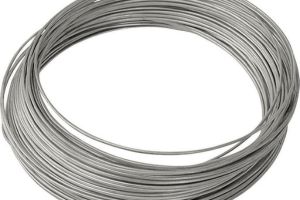
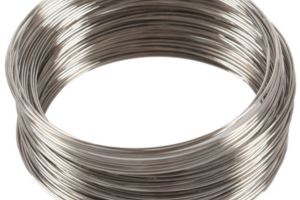
Titanium Wire stands as an essential element throughout a wide range of industries, valued for its outstanding qualities and adaptable uses. Celebrated for its superb strength, resistance to corrosion, and low weight, titanium wire is widely employed in aerospace, medical, automotive, and marine fields. Its solid durability ensures lasting performance, which makes it a favored option wherever dependability is critical. Furthermore, titanium wire’s ability to endure extreme temperatures and severe conditions solidifies its importance in challenging environments. In short, titanium wire proves to be a reliable answer for industries that demand exceptional strength and corrosion resistance.
| Specifications | : | ASTM B863 ASME SB863 |
| Dimensions | : | ANSI/AWCI – 01 -1992 and ASTM E 2016-11 and RRW 360 |
| Length | : | 100 mm TO 6000 mm |
| Diameter | : | 10 mm To 100 mm |
| Specialize | : | Filler Wire, Coil Wire, Electrode Wire, Welding Wire. |
| Chemical composition | Ti | Fe | C | O | N | H | Co | Cu | Cr | Nb | Ni | |||
|---|---|---|---|---|---|---|---|---|---|---|---|---|---|---|
| R | 0.012 | 0.04 | 0.02 | 0.04 | 0.001 | 0.0050 | 0.005 | 0.005 | 0.005 | 55.57 | ||||
| Mechanical Properties |
Tensile strength (Mpa) |
Yield strength (Mpa) |
Elongation |
Af°C |
||||||||||
|---|---|---|---|---|---|---|---|---|---|---|---|---|---|---|
|
895 |
828 |
10 |
170 |
|||||||||||
At Sumakhsteel, we take pride in being the largest supplier and manufacturer in the USA, delivering advanced solutions for every one of your piping requirements. With cutting-edge manufacturing facilities strategically positioned across the USA, we maintain an extensive inventory of more than 25,000 tons of top-quality materials kept ready in stock.
Reach out to us for a fast quote tailored to your requirement.
We supply these Titanium Wire in accordance with DIN, ISO, JIS or ANSI Standard.
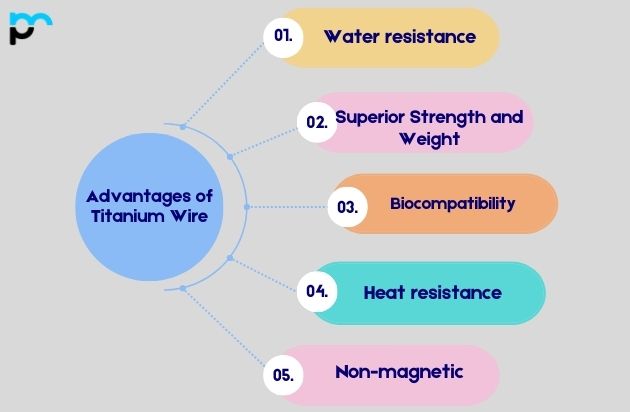
Water resistance: Titanium offers outstanding resistance to corrosion even in aggressive settings like seawater, acidic solutions and chlorinated compounds. Because of this, titanium wire works well for uses where corrosion poses a risk, such as marine settings or chemical plants
Superior Strength and Weight: Titanium is recognized for its high strength and weight, meaning it delivers remarkable strength relative to its weight. This makes titanium wire perfect for situations where strength matters but weight must be kept low, such as aerospace or high-performance sports gear.
Biocompatibility: Titanium is biocompatible, meaning it poses no harm or toxicity to living tissue. Because of this, titanium wire is valuable in medical uses, including orthopaedic implants and surgical and dental instruments.
Heat resistance: Titanium keeps its strength and mechanical properties at elevated temperatures, around 600°C (1,100°F). This makes titanium wire well suited to high-temperature settings, such as space propulsion systems or industrial heating elements.
Non-magnetic: Titanium is non-magnetic and proves useful in areas that require minimal magnetic interference, such as in electronics or medical imaging equipment
Longevity: Titanium is exceptionally tough and long-lasting, even under extreme conditions. This longer lifespan removes the need for ongoing replacement and maintenance, saving time and resources over the long term.
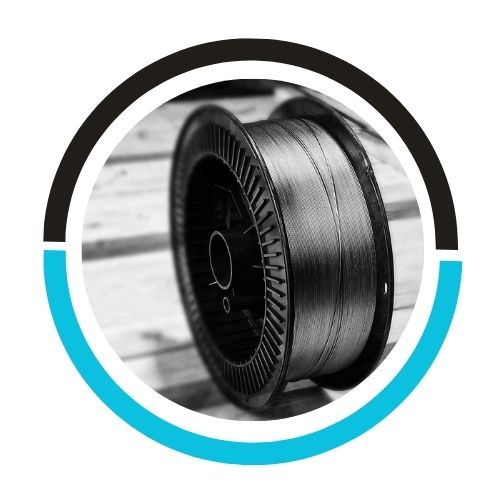
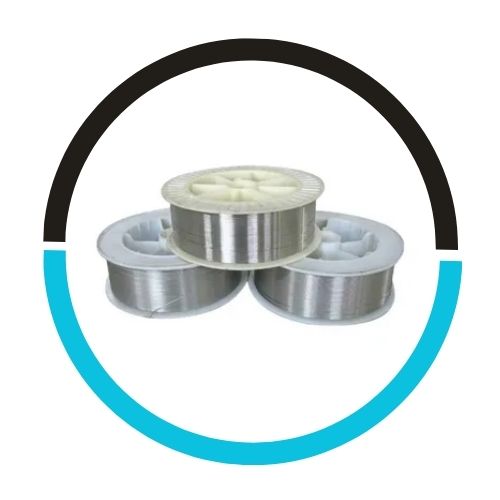
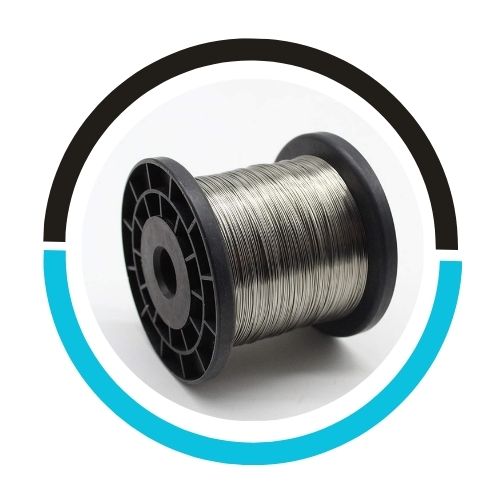

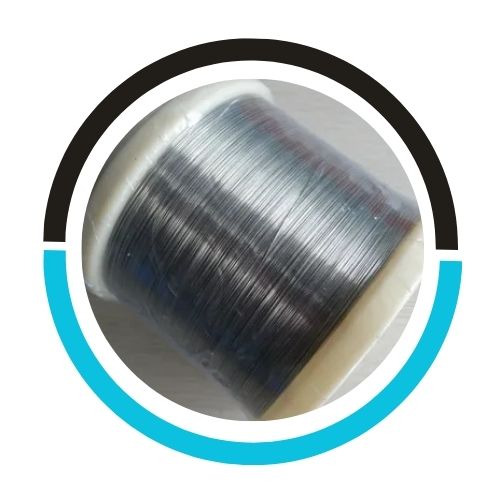
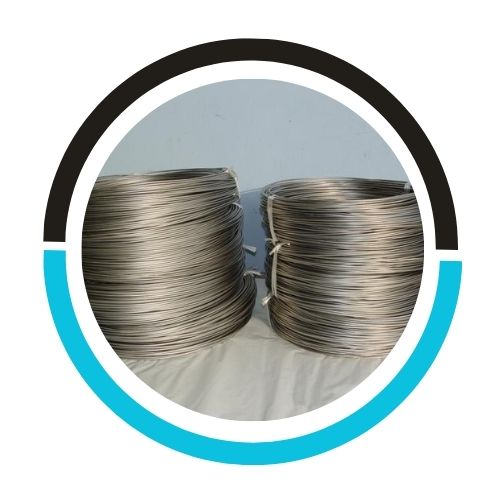
Titanium Wire uses are as varied as the sectors they support, led chiefly by the aerospace, railway, construction and automotive sectors along with petrochemical, nuclear, medical, Oil & Gas, Chemical, Pharmaceutical, Food & Beverage, Nuclear, Thermal Power plants, Paper and Pulp, marine and mining, etc.
Aerospace Industry: Titanium wire sees extensive use in the aerospace sector thanks to its low weight and long-lasting nature. Because of its resistance to corrosion and its high strength-to-weight ratio, it also features in aircraft systems, engine parts and wiring systems.
Medical Applications: Titanium wire is biocompatible, meaning it poses no harm or toxicity to living tissue. It appears in medical implants like bone pins, screws and plates. Its inert quality makes it well-suited for placement within the human body.
Chemical applications: Titanium wire’s resistance to corrosion gives it worth in the chemical industries. It serves in heat exchangers, reactors and corrosive tanks.
Electronics Industry: Titanium wire is applied across many uses in electronics, such as serving as a heating element in industrial laboratory furnaces and in producing resistive capacitors
Jewellery: Owing to its hardness, longevity and anti-allergic qualities, titanium wire also finds a place in jewellery making. It is frequently paired with other metals or used to craft a jewellery piece that is simply modern and timeless.
Types of titanium: Titanium comes in several types, each offering properties suited to particular uses. Common grades include Grade I, Grade II, Grade 5 (Ti-6Al-4V), Grade 7, and Grade 23 (Ti-6Al-4V ELI). Select the grade according to considerations like corrosion resistance, strength, and biocompatibility that matter for your application.
Application Requirements: Think about the particular demands of your application, including thermal resistance, corrosion resistance, power-to-weight ratio, and conductivity. Pick the titanium grade that best satisfies these requirements.
Wire Diameters and Forms: Titanium wire comes in a wide range of diameters, including round, flat, res, and shaped wires. Weigh factors like strength, flexibility, and ease of use, and select the appropriate size and style for your intended purpose.
Finishes: Depending on the use, you might require a particular finish, such as polished, matte, or coating. Evaluate surface finishes with regard to appearance, corrosion resistance, and compatibility.
Certifications and Standards: Make sure the titanium wire complies with the relevant industry standards and certifications, such as ASTM (American Society for Testing and Materials) specifications. Following these standards guarantees quality and efficiency.
Yes, Titanium wire is capable of being joined through several methods, including gas tungsten arc welding (GTAW or TIG welding), plasma welding, and resistance welding. That said, because titanium is highly reactive, the welding process demands careful management of shielding gases and welding settings to avoid contamination and produce strong, high-quality welds.
Yes, Titanium wire can be recycled. Through a range of recycling methods, such as melting and refining, it can be recovered and reused to make new titanium products. Recycling contributes to preserving natural resources, lowering energy use, and reducing the environmental effects tied to titanium production.
Titanium wire is sized mainly by its diameter, expressed in millimeters or inches. Common diameters span from a fraction of a millimeter up to several millimeters. Wire can also be classified by gauge, usually using the American Wire Gauge (AWG) system, which denotes thickness or diameter.
Yes, Titanium wire is suitable for underground applications. Its outstanding resistance to corrosion makes it well-suited to environments with high moisture and soil acidity. Correct installation methods and attention to mechanical properties guarantee durability and dependability in underground settings, such as electrical grounding systems or geothermal installations.
Phone Us: +91 7208967217
Email: sales@sumakhsteel.com