Home > Stainless Steel > Stainless Steel 347 Forgings
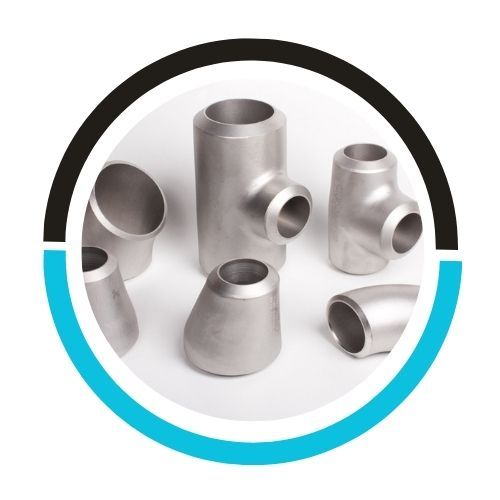
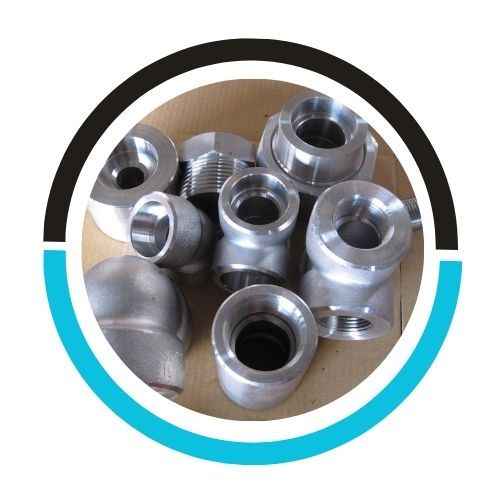
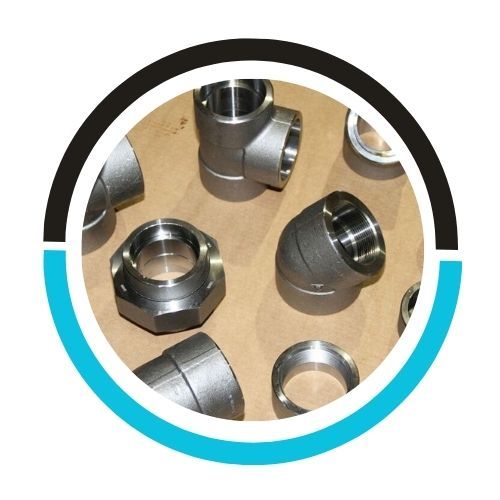
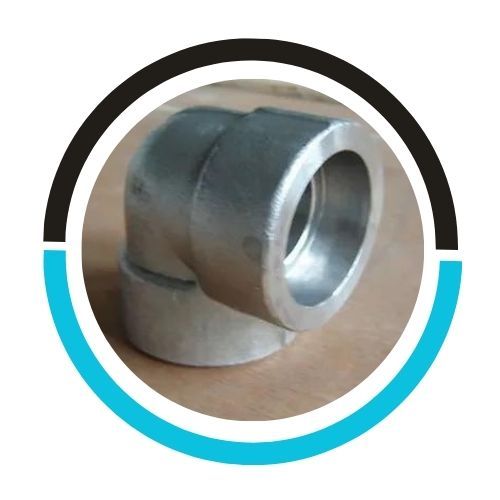
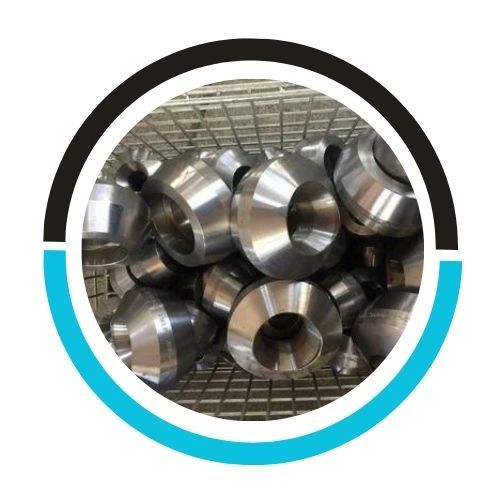
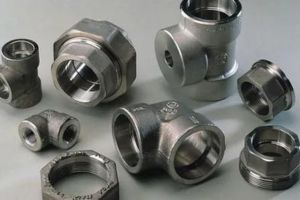
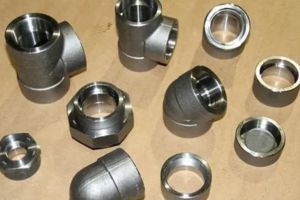
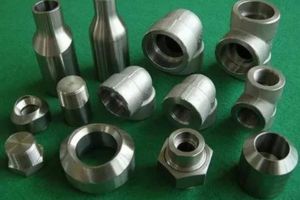
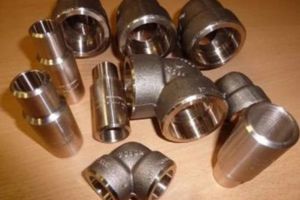
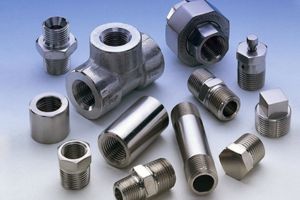
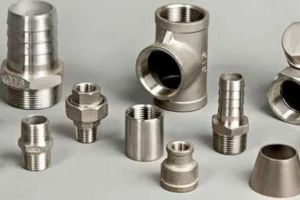
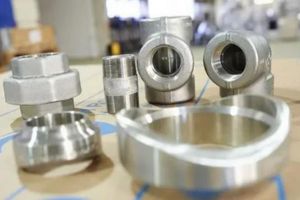
Our company excels at supplying a varied range of Stainless Steel 301 Forgings obtained from premier vendors celebrated for their stainless steel proficiency. These forgings are meticulously tailored to meet a broad spectrum of industry needs, providing adaptability in dimensions, grades, and standards. Commonly employed in fields such as automotive, aerospace, and food processing, they are valued for their exceptional corrosion resistance and durability. Built with a robust microstructure, these 301 stainless steel forgings offer superior strength and toughness, guaranteeing dependable mechanical performance across a range of applications.
| Specifications | ASTM A182, ASME SA182 |
|---|---|
| Standard | DIN, ASTM, BS and all International Standards |
| Flat bar blocks | up to 27″ width and 15,000 lbs |
| Cylinders and sleeves | up to 50″ maximum O.D. and 65″ maximum length |
| Discs and hubs | up to 50″ diameter and 20,000 lbs |
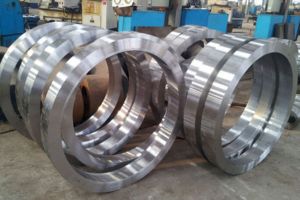
| Rolled, hand forged or mandrel forged rings | up to 84″ maximum O.D. and 40″ maximum length |
| Rounds, shafts and step shafts | up to 144″ maximum length and 20,000 lbs |
| Grade | C | Mn | Si | P | S | Cr | Mo | Ni | N |
| SS 301 | 0.08 max | 2 max | 0.75 max | 0.045 max | 0.030 max | 18 – 20 | – | 8 – 11 | – |
At Sumakhsteel, we’re proud to be the largest supplier and manufacturer in the USA, delivering cutting-edge solutions for every one of your piping requirements. With advanced production facilities strategically positioned across the USA, we maintain an extensive inventory of more than 25,000 tons of premium-quality materials kept ready in stock.
Reach out to us for a fast quote tailored to your requirement.
We supply these Stainless Steel 301 Forgings conforming to DIN, ISO, JIS or ANSI Standard.
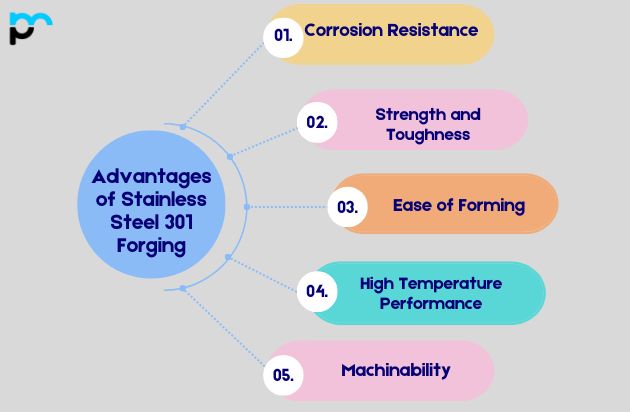
Corrosion Resistance: Stainless Steel 301 offers strong resistance to corrosion, which makes it well-suited for settings where contact with moisture or chemicals may be an issue. This characteristic remains intact even after forging thanks to its natural composition.
Strength and Toughness: It shows good strength and toughness, qualities that are essential for uses that demand durability and dependability across differing conditions.
Ease of Forming: Stainless Steel 301 is easily formable, which aids the forging process. It can be molded into intricate shapes without sacrificing its mechanical properties.
High Temperature Performance: It holds onto its mechanical properties at high temperatures, making it appropriate for uses where resistance to heat is needed.
Machinability: Stainless Steel 301 is fairly easy to machine following forging, permitting accurate finishing and dimensional precision.
Stainless Steel 301 Forgings serve uses as varied as the sectors they support, led chiefly by the aerospace, railway, construction and automotive fields along with petrochemical, nuclear, medical, Oil & Gas, Chemical, Pharmaceutical, Food & Beverage, Nuclear, Thermal Power plants, Paper and Pulp, marine and mining, and so on.
Automotive Industry: Parts that need high strength, corrosion resistance, and durability are frequently produced from Stainless Steel 301 forgings. These include components for exhaust systems, brackets, fasteners, and suspension parts.
Aerospace Applications: In the aerospace sector, where reducing weight and resisting corrosion are essential, Stainless Steel 301 forgings serve as structural components, fittings, and fasteners.
Industrial Equipment: A range of industrial machinery, including pumps, valves, shafts, and gears, gains from the strength and corrosion resistance of Stainless Steel 301 forgings, especially in settings exposed to chemicals or moisture.
Medical and Pharmaceutical: Devices and parts used in the medical and pharmaceutical fields demand materials that clean easily, remain non-reactive, and withstand corrosion. Stainless Steel 301 forgings work well for surgical instruments, medical implants, and processing equipment.
Mechanical Properties: Determine which mechanical characteristics your application demands, including tensile strength, yield strength, and hardness. Stainless Steel 301 generally provides solid strength and toughness, though the exact needs can differ based on how the part is used.
Corrosion Resistance: Evaluate the operating conditions the forgings will be exposed to. Stainless Steel 301 is recognized for its outstanding corrosion resistance, yet various grades within the 301 family can differ in how well they withstand particular chemicals or environments. Confirm that the grade you select satisfies your application’s corrosion resistance needs.
Formability and Machinability: Take into account the formability and machinability the forgings call for. Stainless Steel 301 is typically simple to shape and machine, although aspects such as how complex the part’s geometry is and the precision demanded can affect your decision.
Stainless Steel 301 forgings may be prone to galvanic corrosion when placed in contact with unlike metals in electrolytic settings. Applying suitable insulation or choosing compatible materials can reduce this risk, guaranteeing durability and performance across a range of applications.
When choosing Stainless Steel 301 forgings, weigh aspects such as mechanical properties (strength, toughness), resistance to corrosion, formability, thermal stability, adherence to industry standards, value for money, and dependable suppliers. Adapt your decision to the particular demands of your application to achieve the best performance and long-lasting durability.
Yes, Stainless Steel 301 forgings can be recycled. They can be melted and repurposed to create new stainless steel products without sacrificing their intrinsic properties. Recycling stainless steel supports the conservation of natural resources and lessens environmental impact when compared to making new materials from the ground up.
Stainless Steel 301 forgings generally do not need corrosion protection coatings because of their built-in resistance to corrosion. That said, in exceptionally severe conditions or for particular applications, supplementary coatings such as epoxy or paint can be applied to add an extra barrier of defense against corrosion.
Phone Us: +91 7208967217
E-mail: sales@sumakhsteel.com